
By the Custom Patched USA design & production team · Updated October 2026
The selection of fabric is the starting point of any quality embroidered patch. It is important to understand that even the finest design can be spoiled by using inappropriate fabric. Fabric defines the neatness of embroidery work, durability of threads and longevity of patches as products.
Knowing about the features of fabrics will help to get the best results from the process. Regardless whether you make patches for uniforms, companies, organizations, schools or personal usage, it is important to know what fabrics exist and how to choose the best one.
The cloth that is selected as the base material will be a major determinant of the aesthetics, longevity, and stitching quality of the embroidered patch. The selection of a suitable cloth ensures that the patch will be capable of supporting dense embroidery without distorting the design elements.
The use of a suitable fabric enhances productivity since the machine will stitch consistently.
It is important to assess a number of features that affect the performance before choosing a particular material.
One of the most essential fabric features is good thread holding capacity that would prevent embroidery from shifting and puckering.
Strong stitching base requirements are effective in ensuring proper stitch positioning while minimizing the pucker around complex designs.
Different fabric weight considerations affect the rigidity of the final product. It is better to use lighter fabrics for smaller and decorative patches, whereas heavier fabrics will make the larger design firmer.
Smooth fabric will result in sharp-edged embroidery.
Some common materials have been chosen due to their consistent performance with different kinds of patches.
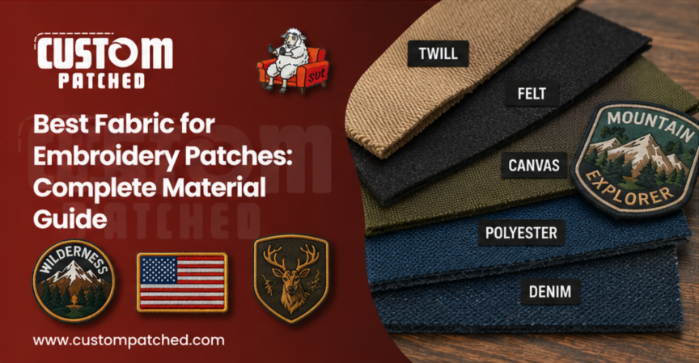
Among those that are most commonly chosen, there is twill fabric for patches. It features a tight weave creating a surface on which dense embroidery can be performed while providing high durability.
Twill does not stretch during production and therefore can be used for logos, badges, uniforms, and corporate design where accuracy is important.
The majority of decorative patches utilize felt patch materials since it provides them with a soft touch and somewhat raised effect. Felt is often used in making patches for schools, fashion, and vintage style patches.
While being attractive, felt might not perform as good as tightly woven fabric in highly detailed embroidering.
Natural fibers continue to be an effective choice in some cases. Cotton patch backing offers a comfortable base material while providing support for medium density stitching.
Cotton is often chosen when making casual wear and light patches where flexibility takes precedence over rigidity.
The level of stiffness will affect the ability of a patch to retain its shape even after continuous use.
The higher fabric stiffness levels used, the better the chances of having more defined edges and the patch lying flat. Very stiff materials may be inflexible for use on moving clothes.
Maintaining a good balance of stiffness and comfort guarantees the success of patches.
For lasting patches, it is necessary to use materials capable of withstanding daily use.
Good durability for embroidered patches needs to be made from materials that are resistant to fraying, stretching, fading, and being washed again and again. Generally, woven materials tend to be more stable than loose-fitting materials since they do not lose their form while offering protection to the embroidery.
Durable materials are particularly useful when it comes to professional uses like work uniforms.
| Type of Fabric | Use For | Pros | Cons |
| Twill | Uniforms, business logos, apparel | Smooth finish, durable, good detailing | More rigid fabric |
| Felt | Decorative patches, crafts, apparel | Soft texture, distinctive look | Not ideal for intricate embroidery work |
| Cotton | Casual wear, lightweight patches | Comfortable, breathable | Average durability |
| Polyester Blend | Outdoor usage | Water-resistant and durable | Not natural-feeling fabric |
| Canvas | Rugged equipment, heavy bags | Durable | Feels heavier compared to other fabrics |
An experienced manufacturer never makes such judgments by mere appearances. The purpose of usage, the environment in which the patch will be used, the density of embroidery, and its life expectancy are considered before making any decisions.
The right backing fabric selection helps to create a patch with the right combination of design, functionality, and aesthetics.
These choices ensure creation of professional patch materials.
There are several mistakes that can happen due to negligence and that can influence the final product.
The choice of the optimal fabric for the patch depends on its intended use.
Should the patch require repeated handling, frequent washing, or exposure to the outdoors, it is more appropriate to go for stronger woven fabrics. The patches designed to have a decorative function often require softer fabrics.
Comprehending the connection between the structure of the fabric and embroidery quality allows for making the order of custom patches easier and more effective.
The next important feature to consider is the degree of intricacy of the logo, which needs to be embroidered. It is easier to embroider simpler logos with larger forms; whereas complicated logos, fine lettering, and borders are embroidered only on more stable fabrics.
The surrounding in which the patch is going to be utilized also affects the choice of fabric. Patches meant for use in work wear or sports apparel or other outdoor wear are supposed to be made from fabrics that are able to resist the wear and tear associated with regular cleaning and changing weather. As regards decorative patches applied on clothes or accessories, they may not require maximum durability but rather appearance and feel.
Where complex logos, uniforms, promotional branding, or artwork is needed, custom embroidered patches tend to deliver the best results.
Selecting the right material can make a significant difference in the appearance and lifespan of an embroidered patch.
The best fabric for embroidery patches depends on how the finished patch will be used, the level of design detail, and the desired balance between flexibility and durability. Twill remains a popular all-around choice because of its stability and clean finish, while felt and cotton offer unique advantages for specific applications.
By evaluating fabric strength, weight, texture, and long-term performance before production begins, anyone can create embroidered patches that deliver both professional appearance and lasting quality.
Embroidered, woven, PVC, printed, chenille and leather side by side.
Which is right for your design.
The right size for hats, chests, sleeves and backs.
How we match your brand colors.
File types and minimum text sizes.
How coverage changes the look and price.
Get a patch type recommendation in under a minute.
Send any idea, sketch or AI image. Free design and digitizing.
Send your logo, sketch or idea. You get a free mockup and proof within 24 hours and pay only after you approve it.
Get my free quoteFree design help